

As CEO of SYNLawn UK, Michael Walker is bringing tour-calibre synthetic systems and plant-based construction materials to clubs across the UK and Europe. He speaks to Golf Business News about technology, perceptions and why practice facilities are at the forefront of innovation.
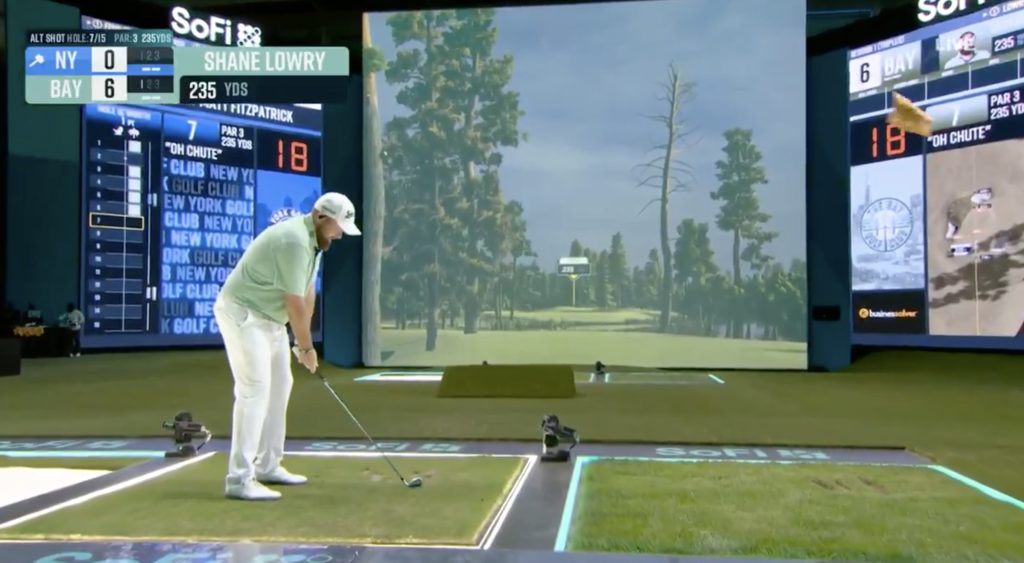
TGL presented by SoFi, the indoor golf league founded by Tiger Woods and Rory McIlroy, has just wrapped up season two and SYNLawn’s involvement is central to this success. What does that partnership represent for you?
Michael Walker: When SYNLawn was appointed Official Synthetic Surface Partner to TGL presented by SoFi, it was subjected to a level of scrutiny few products ever face. How the ball reacted, with realistic bounce, check and roll had to meet the highest performance standards in the world.
You have a purpose-built arena, packed with technology and designed to bring the drama of championship play into a two-hour broadcast window. And within that is 31,000 square feet of synthetic turf tasked with standing up to the scrutiny of the best players in the world.
For me, that was validation. If surfaces can stand up to elite professionals under lights and under pressure, they can certainly stand up to sustained daily use, whether for golf simulators, putting greens, practice facilities, adventure putting courses, and even full-scale golf courses.
The same technology specified there is now available through SYNLawn UK. With sustained R&D investment focused on both playability and environmental impact, it changes the nature of conversations with clubs and operators.
While SYNLawn has a rich history going back to 2002, SYNLawn UK was only established in 2024. How did that happen?
Sustainability was the bridge. I founded Build With Hemp to bring industrial hemp into the built environment.
Industrial hemp is one of nature’s most powerful climate tools; an acre can sequester more carbon in just 90 days than a 20-year-old woodland forest. When used as hempcrete, it can embed hundreds of kilograms of carbon per square metre within the fabric of buildings, locking carbon into the built environment for decades.
Across Europe and around the world, industrial hemp is already being used in major construction and infrastructure projects — the real opportunity for the UK is understanding how to integrate it into our more traditional building methods.
More recently, we’ve also begun incorporating industrial hemp into the SYNLawn UK sub-base build-up. By integrating hemp-based materials that already embed significant amounts of carbon, we can create a structurally sound and more environmentally responsible foundation. It reduces the amount of quarried aggregate required, while improving drainage performance and contributing to long-term structural stability.
Around the same time, SYNLawn was forming its partnership with TGL. What impressed me was how far SYNLawn had advanced the science and technology of artificial turf while maintaining a genuine commitment to environmental responsibility and product performance.
What began as an R&D collaboration on sustainable projects quickly grew as architects and developers kept asking us to design greener urban and suburban environments. But these ideas also translate naturally into golf course environments — from practice areas and landscaping to structures and integrated design features
Eventually it became clear the opportunity was much bigger — so we took on the UK and Ireland and launched SYNLawn UK in 2024. However, sadly, I now spend more time at some of the most incredible golf clubs without my clubs, consulting on how we can incorporate both SYNLawn golf collection and our Build with Hemp natural materials into their courses to create spaces where sustainability and performance are never compromised.
What are some of the challenges to be solved?
Historically, practice facilities have been under-prioritised, with most investment directed toward the golf course itself. Let’s be honest — for many golfers, the expectation of the driving range has traditionally been pretty low.
But that thinking is changing rapidly, and we’ve flipped that concept on its head. With the introduction of advanced surfaces, better design and ball-tracking technology, the range is no longer just a warm-up space — it’s becoming a central part of the golf club experience.
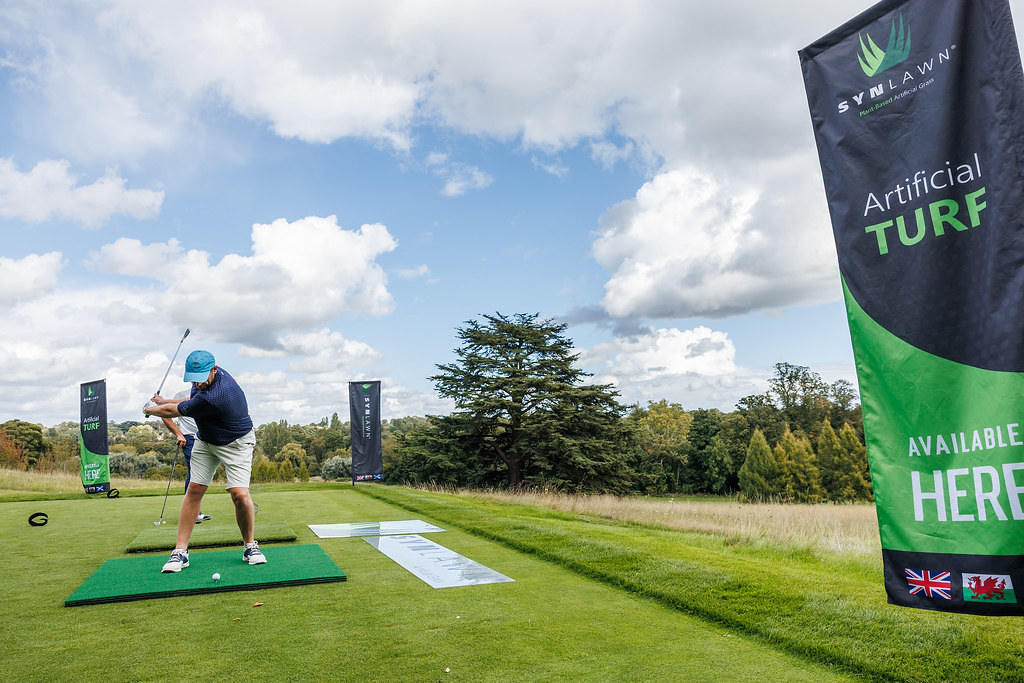
For years the industry has relied on cheap imported mats… that wear out quickly and are frequently dumped into landfill. Clubs are now looking for longer-term, higher-performance solutions that deliver durability, playability and a significantly lower environmental impact.
Practice environments are high-traffic, revenue-generating assets. In many cases the range is becoming the new P&L focus for clubs, attracting players, coaching programmes, events and social experiences throughout the day and evening.
Delivering these next-generation facilities requires more than simply installing a surface. The design, sub-base engineering, drainage, performance layering and installation precision are critical to achieving consistent ball reaction and long-term durability. That’s why only the professional installation team at SYNLawn UK has the experience to construct these systems properly and provide the performance warranties clubs expect.
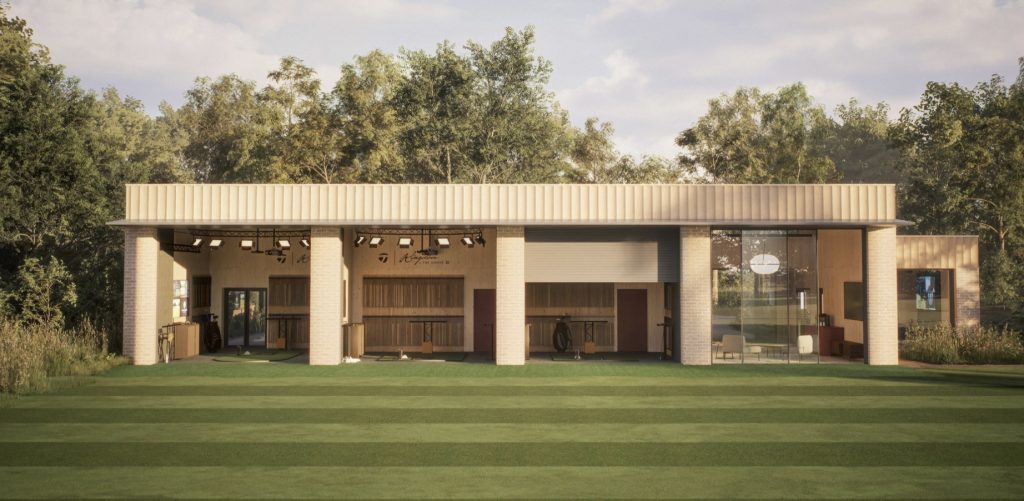
A good example is The Kingdom at The Grove, developed in partnership with TaylorMade Golf and The Grove. Precision Putt is used indoors, Classic Chip in the short-game zones, and Tee Strike systems across a 7.4-acre range redevelopment with integrated target greens and fringes.
These surfaces must receive shots from distance, deliver natural bounce, check and roll, and withstand sustained footfall. Our systems were selected because they deliver tour-calibre performance across both controlled indoor environments and expansive outdoor practice areas. It demonstrates how synthetic surfaces now sit at the centre of elite performance architecture rather than on the periphery.
We’ve already delivered some of the most significant practice facility transformations seen in the UK golf industry. This is quickly becoming the new standard, and we are leading it.
What specifically differentiates SYNLawn’s golf systems from traditional solutions?
We are not installing mats — we are delivering engineered playing systems. SYNLawn has made a significant long-term commitment to investing in both environmental surface technologies and advanced performance engineering so that synthetic systems can increasingly replicate — and in some cases enhance — the real performance characteristics of traditional golfing surfaces.
Quite simply, we are not dropping off golf mats to clubs; we are installing some of the most advanced golf turf systems ever created for the game — designed for the player and built for future generations.
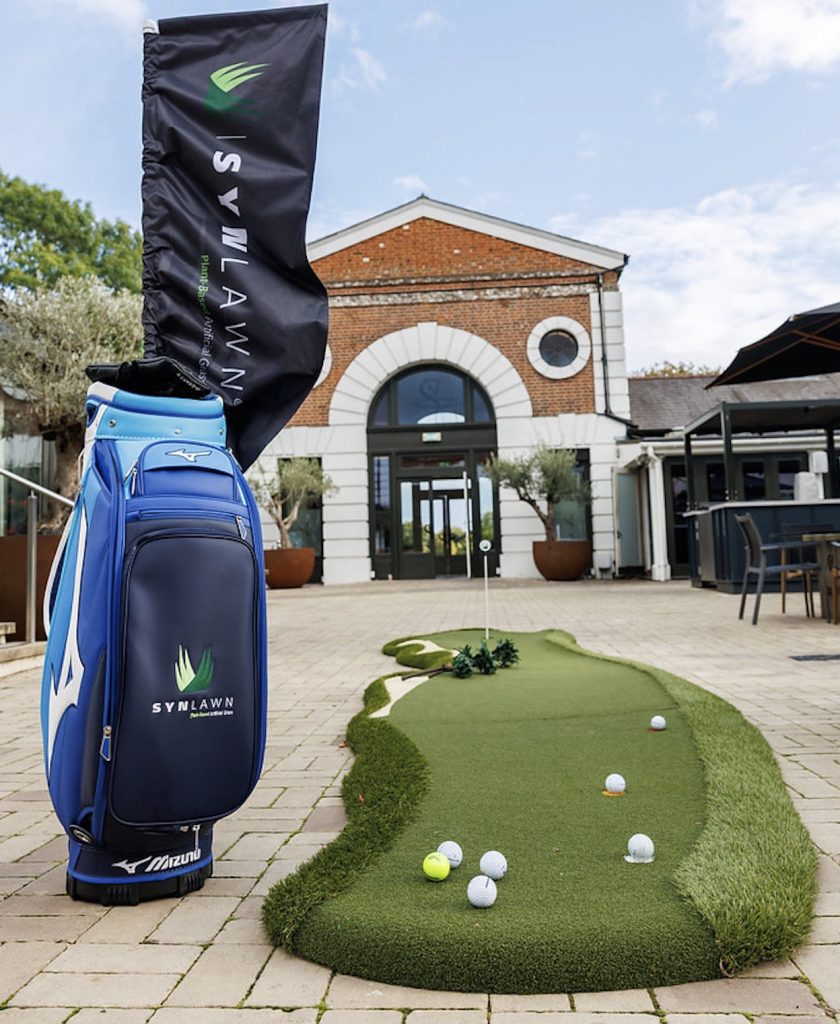
Products such as Precision Putt, Tee Strike, Tee Strike+ and Classic Chip are purpose-built performance surfaces designed to support data-led club fitting, high footfall and year-round operation. These systems are engineered from the base structure up to deliver consistent ball interaction, durability and sustainability, while integrating seamlessly with modern tracking technologies and coaching environments.
At TGL, the putting surfaces were running at true championship pace. That same performance technology is now being specified for UK practice facilities, short-game complexes and high-performance training centres. It demonstrates how far the materials science has progressed.
Golf clubs are under pressure from rising costs and environmental scrutiny. How does SYNLawn UK address that?
The pressures are real. Water costs are increasing, chemical inputs are under greater regulation, and labour and machinery expenses continue to rise.
Synthetic systems reduce irrigation demand and eliminate recovery cycles in practice areas. That allows greenkeeping teams to redeploy resources towards primary course presentation. When practice facilities remain open year-round, utilisation improves and revenue becomes far more predictable.
There are also opportunities across high-traffic areas — where natural grass is prone to wear, burnout and constant repair — synthetic solutions can significantly reduce water demand while maintaining aesthetics golfers expect.
We also look carefully at how water moves through the landscape. Our engineered turf sub-base systems can work with integrated drainage layers that capture and redirect rainwater beneath the surface.
From a sustainability standpoint, SYNLawn’s backing systems incorporate bio-based inputs derived from sugar cane and soy, while the grass fibres utilise recycled plastics. Crucially, the products are fully recyclable at end of life.
This is not a short-term installation model. We operate within a closed-loop approach with full lifecycle management, ensuring clubs benefit from long-term performance, reduced environmental impact and a system that aligns with the future direction of the golf industry.
How should club owners evaluate whether synthetic systems make commercial sense?
Simple, the numbers don’t lie. The starting point is to look at utilisation rates and maintenance spend over a two to five year cycle. Too often, decisions are made based purely on the upfront installation cost, rather than the true operational cost of maintaining natural practice areas.
Clubs should calculate irrigation demand, labour hours, machinery depreciation, fertiliser and chemical inputs, and the ongoing renovation cycles required to keep natural practice areas playable. Then compare that with an engineered synthetic system that can deliver consistent performance year-round with minimal downtime.
Once you add in the revenue side of the equation — coaching programmes, club fittings, academy structures, structured practice memberships and increased range utilisation — the commercial model becomes much clearer.
Practice facilities are no longer simply warm-up areas; they are high-frequency assets that can generate predictable income.
When you model the numbers properly, the case becomes very clear. This isn’t just about surface quality — it’s about long-term P&L resilience, operational efficiency and ensuring clubs can deliver consistent playing experiences while managing rising maintenance costs.
What excites you most about the next phase of development in golf facilities?
The integration of design, technology and sustainability is what really excites me. Practice facilities are no longer secondary assets. Data-driven fitting, simulator integration and short-form golf concepts are reshaping how players interact with the game.
At the same time, we’re seeing the opportunity to combine natural construction materials with advanced plant-based turf systems, while embracing golf technology and creating social as well as professional spaces.
Our role is to ensure the ground beneath that experience is engineered, sustainable and commercially robust. If TGL represents innovation on screen, projects like The Kingdom at The Grove demonstrate how that innovation translates into real-world facility infrastructure.
The industry does not need to abandon tradition. It simply needs to support it with better-performing, lower-impact systems. That’s exactly where SYNLawn UK is focused.