

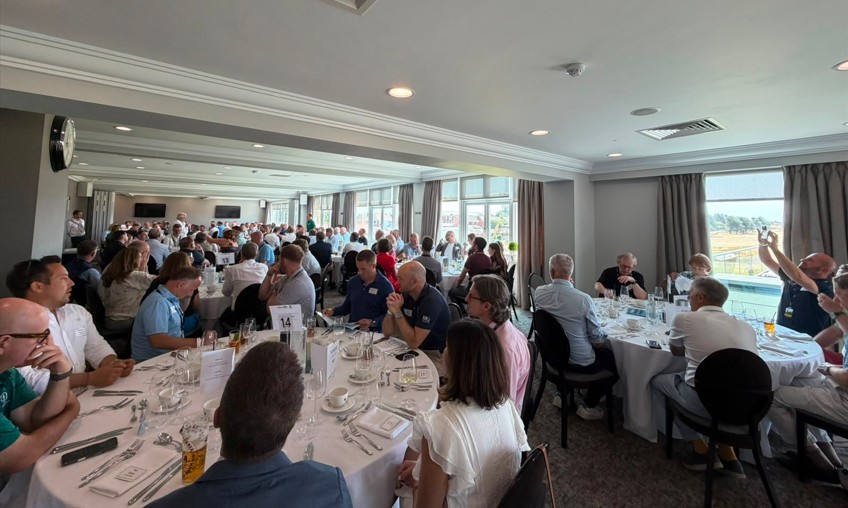
The Stephen Proctor Golf Industry Lunch took place at Hillside Golf Club on the Wednesday before the 154th Open at Royal Birkdale with 140 attendees across manufacturers, national affiliates, federations, agencies, and other golf stakeholders across the industry.
Hosted by Sporting Insights and the BGIA in association with the Golf Foundation, the lunch is always a special occasion. Nick Dougherty, president of the Golf Foundation, spoke eloquently about the power and importance of the Golf Foundation but had a hard act to follow as Ruby Fox, one of the Golf Foundation ambassadors aged 18, stole the show.
The lunch also enabled the industry to celebrate special milestones achieved by two industry stalwarts. Bob Smith and Martin Wild both celebrated their 50th consecutive year working at The Open, both having started at Royal Birkdale in 1976.
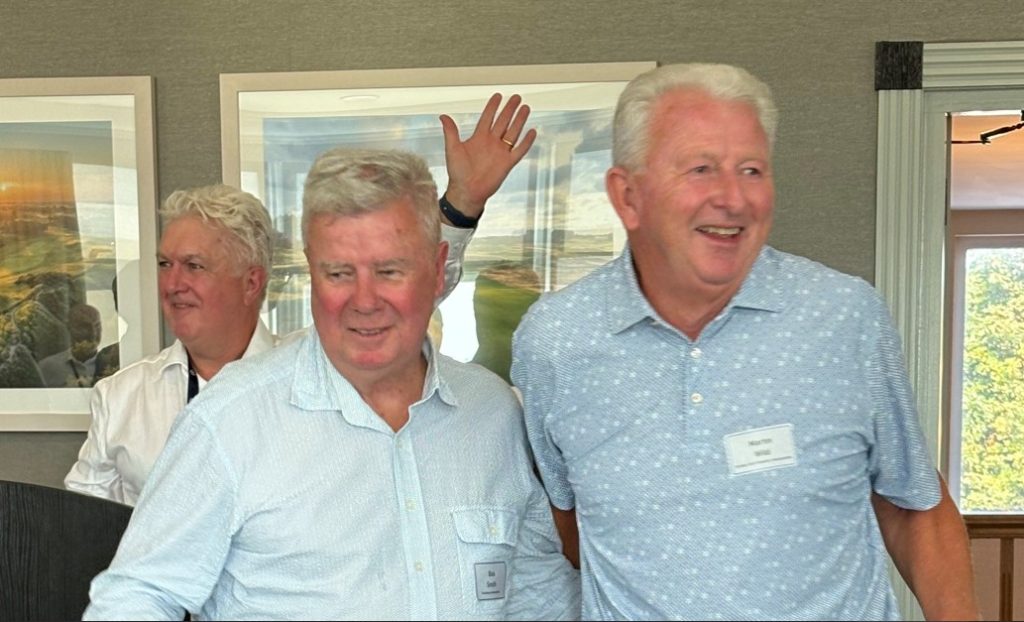
With the tributes running long, this did mean no time for Sporting Insights’ managing director, John Bushell to deliver his customary speech on the state of the industry.
However, Golf Business News has subsequently caught up with John for a discussion about where golf is.
GBN: John, how would you describe the current health of golf?
John Bushell: “By almost any measure, golf is in very good health. Golf participation of adults and juniors under R&A jurisdiction reached a figure of 112.2 million in 2025, up 4.2 million, or 3%, since 2024.
This is made up of 65 million adults, and, particularly encouragingly, 47.1 million juniors, which is up almost 6% or 3.2 million on the previous year.
Club membership is strong too, with a 16% growth since 2020 across R&A territories.
Europe is one of the most thriving areas, with 20.6 million adults playing some format of golf in the last 12 months.
Sporting Insights run a golf participation tracker in up to 15 markets for The R&A and some of its national affiliates. When looking at the original core nine markets within The Golf Barometer, amongst those who play 9 and 18-hole golf, in 2025 women made up 28% of these players, up from 25% the previous year. Looking at all forms of adult participation in golf in the nine markets, women make up 34% of players, up from 31% in 2024. This is also coming at a time where we also seeing participation amongst men and boys increasing. So, the reach of golf is increasing overall but also diversifying.”
GBN : It’s great to see that participation is growing – but presumably with the weather we have seen in 2026, rounds played must be suffering?
JB: “Yes, in GB&I, particularly, we have seen a significant weather-related impact on golf, with initially a very wet spring and then, during the last few months, two intense heatwaves.
Quarter 1 2025 rounds played were 14.5% down on the previous year. Just to give you a sneak preview of the Quarter 2 figures, these also look to be around 8% down on 2025, which would mean that the half year 2026 is around 10% down in terms of rounds played on golf courses in GB&I compared to the previous year.
However, I do not wish to over-state what looks like a bad start to the year, because do not forget that 2025 was the highest rounds played that we’ve recorded in GB&I since we started the rounds played monitor in 1995. We will share more soon, but we expect the half-year to be safely up on 2024.
In simple terms, I’m not worried as the overall baseline for the game would suggest there is significant demand for access to golf courses and to playing rounds at golf clubs, as well as significant demand for alternative formats of the game.”

GBN: “We again see the men’s professional game in the spotlight, with changes to the structure of the PGA Tour, and perhaps changes to LIV Golf. What is your view on the state of the male professional game?”
JB: “The men’s professional game remains a very interesting and much-talked-about topic in many clubhouses and amongst many golfers. We have seen PIF change its plans to invest in LIV – with that apparently starting to take immediate impact now, that is after an estimated $5.3 billion investment up to 2026. The decision to withdraw funding will have a significant impact. We are already seeing more LIV contracted players deciding to return to play more of their sport on the DP World Tour or, subject to fines and agreements, playing their way back onto the PGA Tour.
At the same time, we recently saw the announcement of a significant new PGA Tour structure for 2027, with The Championship Series and The Challenger Series taking shape. How this will impact where golfers play and the knock-on effects on other international tours is still to be seen.
Wherever you look, prize funds continue to increase. The prize fund for the PGA Tour in 2026 has reached $473.7 million (excluding majors). The DP World Tour is a further $158 million, and the LIV Tour was at $470 million at the start of the year (before any tournament cancellations). If you take in the Majors, roughly around $80 million in prize funds, this means that professional men’s tour at the top level is now playing for a prize fund of around $1.2 billion.
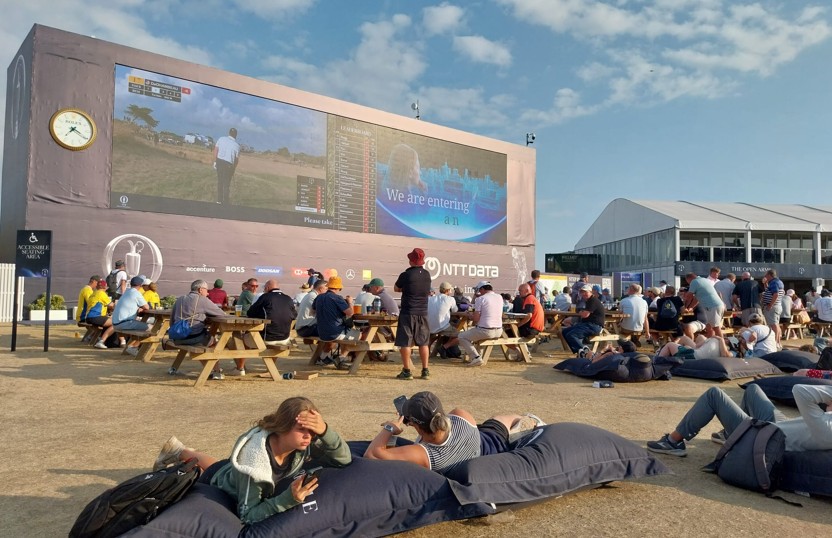
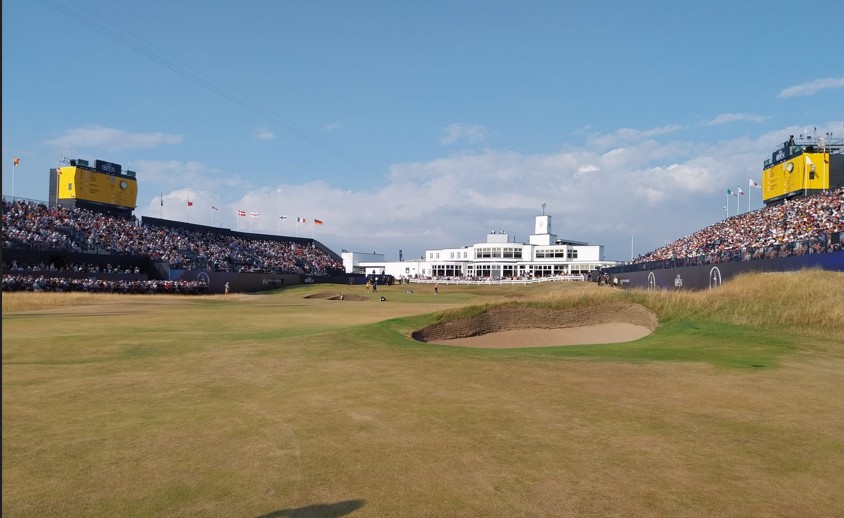
Clearly, there remains a strong appetite to watch the leading stars play the game, as can be seen by the fact that The Open at Royal Birkdale welcomed around 300,000 spectators. There were still many more wanting tickets.”
GBN: ‘So, how do you see the Tours developing – what is the landscape for golf events going forward?”
JB: “We have already seen the Tours and events developing and there are some exciting new innovations.
For instance, Gavin McPherson, an ex-pro footballer from Scotland, qualified for The New South Wales Open through his golf simulator prowess.
I can see there is significant potential for alternative format events and competitions being played almost solely online. Now, I do not for a second think that Golf Simulator play will be bigger than Golf on Green-Grass or that there’s be necessarily massive crossover, but I do think that you’ll see a very different landscape for competitions through golf simulator venues.
Very different, but equally interesting, The Open this year chose to offer, for the first time, a ‘Last Chance Qualifier’ event. That’s a new innovation and one that they decided respects The Open’s longstanding ethos of access awarded on merit, more so than other ideas that were considered, like a YouTube style event.
We’ve also seen The Open, as well as other events on the PGA Tour, becoming more of a major sports event “bucket-list”, and attracting more of a ‘big eventer crowd’ than would have been attracted to a traditional golf event. LIV Golf may have influenced this. Certainly, I imagine that there will be a number of “big eventers” amongst the 300,000 spectators at Royal Birkdale this week.
There’s been lots of talk about The R&A’s code of conduct and ethos and behaviour for attending the Open that was issued for this event. I certainly believe golf does need to cherish and protect what makes it so unique – and The Open celebrating ‘The Champion Golfer of the Year’ is something that is special and must be protected.
Traditionally, the spectators at The Open are largely what we would term “core golfers”: the people who play regularly and drive participation, and who are often associated with golf club members. However, we also really do want this new audience to come. We want them to enjoy the experience, to respect the experience, and then we actually want them to play the game.
GBN: “How does The Open compare to other world class sports events?”
JB: “In terms of spectator numbers, achieving and delivering an Open for 300,000 fans at Royal Birkdale over a week is a very strong performance compared to many world-class sporting events. Comparing spectator numbers between sports can be apples and oranges, but to give a broad idea, Wimbledon can manage 42,000 a day and so over the equivalent 7-days would be 294,000 and so very comparable.
Where the Open performs incredibly well is a very good ticket price for the length of the day and the number of hours of potential sport viewed. The Open at Royal Birkdale on Sunday is £150 for a general entrance ticket, and under 16s still go free.
This compares with pricing such as Silverstone Race Day, which is £229 to £379 for a general access ticket, and there were around 500,000 fans over the weekend – so for 52 laps of the race and under two hours of racing on the track. The England men’s Test match at the Oval this summer against New Zealand had tickets priced between £90 and £160 for general entrance, and the Wimbledon finals were between £245 and £350 to attend this summer.
The FIFA World Cup is a complete outlier, with the World Cup final ticket prices this year at a face value of 2,000 USD to 6,730 USD. The Open represents good value for money and is the only one of these major sports events where under-16s go free.
Maintaining that accessibility will be important. Preserving that connection between The Open and golfing families as well as broader fans of major events should remain a priority as demand continues to grow.
GBN: “Does the Open generate significant revenue to the local area, and does it have other impacts?”
JB: “Yes, definitely. Last year’s Open at Royal Portrush generated more than £280 million in economic benefit for Northern Ireland according to independent research commissioned by The R&A and Tourism Northern Ireland.
Great events do move the needle. Another way to look at it is the long-term benefit in terms of bringing golfers to the area through golf tourism.
The economic value of golf tourism in 2019 in Northern Ireland was £52 million. By 2023, it had risen to £68.2 million, and last year it passed the £100m mark.
Whilst it is great to see the significant increase in the value of golf tourism, destinations around the world need to be careful not to overprice golf. A recent report produced for IGTOA showed that green fee costs in Northern Ireland rose 29% for the main tourist courses between 2023 to 2025.
The golfing experience in Northern Ireland remains superb, and they offer real quality service, but there needs to be a focus to ensure it remains value for money and that domestic golfers from within GB&I or within Ireland itself are not priced out.
GBN: What do you see as the other major trends facing golf at the moment?
JB: ” I alluded to it earlier in your questions when I talked about alternative format golf – much of it played on indoor golf simulators or driving ranges with range-enabled simulator technology.
Alternative format golf is growing fast, both for the social elements of friends for a night out or a new sporting experience. It enables people to compete with their friends playing simulated golf on major golf courses around the world or to use the technology to practise understand swing data. We can see the latter growing most particularly in markets where golf courses are open only six months of the year.
An obvious example is South Korea, which is the third-largest golf market in the world in terms of adult participation and yet only has 524 golf courses, compared to GB&I, which is the fifth-largest golf market, having 3,380 golf courses. The difference is the golf simulator sites. There are over 6,000 golf simulator sites in the capital, Seoul, alone in South Korea with around 4,000 of them owned by one company, GolfZon.
We are also seeing alternative format golf in many markets achieving equal representation amongst men and women. Once you consider all types of alternative format golf – from pitch & putt to adventure golf – then participation in many countries is close to 50% male and 50% female.
GBN: “Thank you, John, is there anything else you’d like to say?”
JB: “I think the only thing I’d like to add is how special it is working in the golf industry and how it is driven by the relationships and friendships established amongst people working across all elements of the game.
This is a sport that relies so much on the work of volunteers and ambassadors in the game – certainly very much at the club level – and at the industry lunch we heard from Ruby Fox as a brand ambassador for the Golf Foundation how special she feels the game is.
I feel so lucky and privileged to have met so many people, from colleagues and clients and so many who I genuinely call friends. That is something that I did not anticipate when I entered the golf industry in 1997. I was thrilled to be able to use the lunch to celebrate Martin and Bob, both previous chairmen of the BGIA. I know I did speak about this on the day, but just for those who weren’t there, a quick note about each of them:
Bob started as a caddy for David Graham, working inside the ropes before forging a successful career including working for many of the leading apparel brands in the 80s, including Glenmuir, Stuburt and ProQuip; becoming the head of international distribution for Peter Millar between 2003 and 2014 – and since 2020 has been the International MD for Turtleston.
Martin Wild started aged 18 as a rep for Petron Golf before joining Dunlop Slazenger, initially working in the cricket division with Mickey Stewart, before launching TaylorMade in the UK under license for Slazenger in 1983 under another golfing legend, Jon Parsons. At this point, Doug McLelland became one of the first signings for TaylorMade in 1983. At this point, their metal wood driver was £69.99! Martin continued his career through Mitsushiba – as Managing Director – launched JJB Golf, before receiving a call from Neil Howie, the then MD of Callaway, asking him to become the European sales director of Callaway Golf.
Golf and the golf industry has grown so much since they started, and a big reason for that because of the brilliant people across our industry.
And, lastly, getting ready to head to the AIG Women’s Open and looking back now on Birkdale and on a brilliant first-time major champion playing fast, brave golf, I really do feel so optimistic for the future of our sport. I hope that we will be able to see the industry gathering in great strength and good health next year in St Andrews in 2027 for the 155th Open.”
GBN. “John Bushell, thank you so much.”