

Founded in 2024, Fescue & Dunes partners directly with world-class destination golf clubs to manage their online branded merchandise sales and global distribution. Here, we talked about to company co-founders Tim Neill and Joe Petrucci about how they came up with the idea and what their plans are for future growth.
Why the name Fescue & Dunes?
We wanted our brand to reflect the visual and emotional identity of links golf – something we both fell in love with when we played in GB&I on our first trips. The fescue grasses and dunes are what define the experience for travelling golfers, particularly Americans coming to Great Britain and Ireland. We knew that we needed our name and our brand to be authentic and give a nod to history and tradition rather than something overly technical, manufactured, or corporate.
Neither of you come from the golf industry. Looking back, what did you see that golf insiders couldn’t see?
Put simply, we recognised that many golf clubs only sold to visitors when they were physically standing on the property. We saw a clear gap in how destination golf clubs handled post-visit engagement and merchandise sales. Clubs invest heavily in creating memorable experiences, but once a golfer leaves the property, the ability to buy merchandise is often limited or non-existent.
In many cases, e-commerce was either minimal, outdated or built as a COVID-era add-on rather than a real retail strategy. We believed there was untapped lifetime value in those visiting golfers that wasn’t being captured.
There were two key moments that led to our creation. The first was a trip to Portmarnock where Tim bought a polo shirt and later realised he couldn’t easily replace it online when it was permanently stained after a red wine accident. The second was a trip to Ballybunion, where the pro shop had closed and there was no way to purchase items despite being at one of the world’s great clubs. That combination of frustration and opportunity made it clear this wasn’t a one-off issue – it was systemic.
We then exhibited at the PGA Show in 2025 and the overwhelming interest that we go there that really drove it home for us. We recognised that what we had identified was a clear and urgent issue for many destination clubs, and one that they’d like to find a way to solve.
Is Fescue & Dunes a retail business or a marketing business?
It is both. It is a commerce platform at its core but heavily driven by targeted digital marketing. A major part of the business is identifying golfers – particularly Americans who have travelled to Great Britain and Ireland – and re-engaging them after their trip through highly targeted campaigns.
How did you decide on your apparel partners?
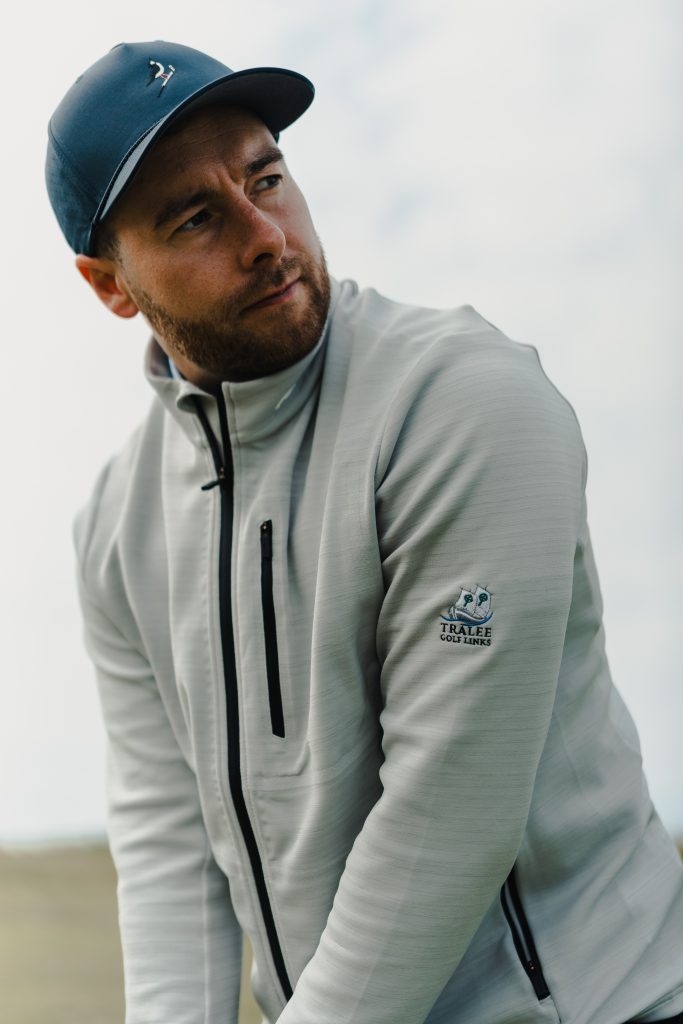
We selected brands already familiar to American golfers and often under-represented in pro shops in the UK and Ireland. Brands such as Johnnie-O, Straight Down, Harlestons and TRUE Linkswear allow for easier sizing confidence and reduce friction in the purchase process. We also built relationships directly through industry engagement, including PGA Show meetings.
What assumptions about golf retail have proven completely wrong since you launched?
That clubs want to manage everything themselves. In reality, many clubs want to offer better retail experiences but don’t want the operational burden of inventory, fulfilment, logistics, customer service and sizing risk. Another assumption is that golf retail is primarily about what is sold in the shop at the time of visit, rather than what could be sold after the visit.
What have you learned about the culture of the more established golf clubs that has surprised you most?
Some of the older clubs have, not unexpectedly, taken their time to watch us and how we have progressed. We have also had some boards and committees hold off as they think through what it looks like to further commercialise their brand.
What has been most surprising for us – and we think for people that are watching us – is the trust that we have earned from some of the most established destination clubs, including Royal St George’s, Royal Birkdale and Portmarnock.
How did you persuade such iconic clubs to trust a start-up?
Early on, we had some industry veterans work with us through the idea and solution. That was an important step in gaining trust with a number of clubs. We also spent a lot of time visiting with clubs and their management teams. This proved to be essential.
What percentage of a typical destination club’s merchandise revenue do you think disappears today because golfers can’t buy what they want, when they want it?
We think that clubs leave at least 10-15 per cent on the table from current year sales and historical visits. That 15 per cent comes from pro shops that are closed, shops running out of specific products midseason without a way to restock, the ‘sameness’ of products from shop-to-shop, and the collection of brands a shop might carry. So, we think that we can add $100,000 to $150,000 to a shop that is doing $1 million per year.
Every golf club talks about customer data. How many clubs are actually using it effectively?
Very few clubs are using data effectively today – mostly because they don’t have much data to use. It’s a key part of our value proposition to clubs. We are a data-gathering and data-leveraging machine, and that’s for golfers we believe or know have played a particular course and for exposure to those same golfers who believe or know have not played particular courses, too.
You’ve built the business around travelling golfers. What have you learned about the psychology of golf travellers?
We love the balance between golfers who want to tick off the best known bucket list courses and those who want to uncover lesser known hidden gems or courses that are off the beaten path – both of which provide the kind of experiences that you’ll talk about for years.
There are a lot of reasons why the top-ranked courses are so sought after – the courses are remarkable and the clubs are bathed in history. For American golfers, it’s just an amazing experience.
But once you’ve ticked a number of them off your list, you realise that there are these gems where the experience is different but equally compelling – clubs like Portsalon, Covesea, Cruit Island, Pennard and Hayling Island. They don’t get nearly as many busloads through them but they are great places to play.
What is the most valuable piece of information a golf club doesn’t currently know about its visitors?
Contact information. We are always surprised at how little data clubs connect on the visitors that come through to play. A few of our collaborative club programmes have been developed to help clubs gather more first party data – it’s also one of the reasons why it is so important for us to work with tour operators to get to golfers after they’ve taken a trip.
What will the average golf shop look like in 2030?
This is a huge question. We know that clubs and their pros and general managers have invested a lot in their shop. We also know that there are parts they’d like to change. The buying cycles are very long and structured. Products can look very similar across pro shops. It’s hard to take a risk on new brands or alternative colour ways.
We can really help here. We provide ways for clubs to sell more brands – everything from established brands that are more common in the US like Johnnie-O and Straight Down to up and coming brands like Harlestons, True and Angus and Grace Go Golfing. It provides opportunities for golfers to get logos on exactly the piece and colour they want.
Pro shops should take advantage of that – they should offer eight colour ways of a polo shirt if it’s available. But they can’t do it with the existing footprint in the same way we have. We believe that the average golf shop will be a blend of the onsite purchases you see today with purchases that take advantage of our product diversity and decorate-on-demand and direct ship model.
What does success look like in five years’ time?
In terms of clubs, we would like to have most of the top 100 courses in Europe on the platform and a solid base in Australia and New Zealand. Portugal is a country that particularly excites us, while we also hope that the core idea translates to some of the great new golf destinations in the US too.
Rather than having a certain number of customers though, I think it’s more important for us to know that we can connect golfers with the clubs that they played and loved.