

Forget Mozart and Julie Andrews, the hills and valleys of Austria are alive with the sound of golfers these days, as word gets out on the quality and variety of courses on offer. Nick Bayly heads to SalzburgerLand, the alpine region in and around Salzburg, which is earning a growing reputation as a popular summer holiday destination for adventurous travellers with and without golf clubs in tow
It was while checking in my golf bag at Gatwick airport for my early morning flight to Salzburg that I first came across the extent of the marketing challenge that is presented to the tourist boards across Austria’s various regions when it comes to golf. While noting my destination and the contents of my over-sized luggage, the man at the British Airways check-in desk remarked, “Oh, I didn’t know they had any golf courses in Austria. I hope you’ve packed your crampons!”
While I managed to rustle up a wry smile at his attempt at early morning humour, the witty aside was not altogether unfounded. While this mountainous, land-locked country is world-famous for its skiing, as well as being the birthplace of Wolfgang Amadeus Mozart and the backdrop to all that annoying family singing in The Sound of Music – and a successful host of this year’s Eurovision Song Contest – it hasn’t made too many in-roads as a golf holiday destination.
More’s the pity, as despite its unpromising geological composition – 60-70% of its 32,000 square miles are considered mountainous – Austria boasts some of the most spectacular golf courses to be found anywhere in the world, with many of its most stunning layouts carpeting the flat valley floors that occupy the land between all those vertiginous peaks. While some courses do rise and fall dramatically around the lower alpine slopes, there are only a few where extra-long spikes, rather than crampons, might be required to navigate the fairways.
The golf season in Austria is very much dictated by location and altitude, as there are often considerable climatic differences within short distances and small differences in altitude. While some lowland courses are open in early March and remain playable until November, others located higher up might not open until late April or early May and close in October, while other courses in the east can be played all year round.
My four-day trip was to SalzburgerLand, a region roughly the size of Devon that is centred around the city of Salzburg. Located in the very north of Austria, only a few miles from Germany’s southern border, SalzburgerLand is home to a population of roughly 500,000, and, more importantly, around 20 golf courses. And with an equal number of additional layouts located within less than an hour’s drive, the area provides a gateway to around as many golfing options as you could tackle in six weeks of Sundays. Most of these courses can be played at discounted prices using the Golf Alpin card which, for a one-off payment, allows visiting golfers to book three, four or five rounds at different golf clubs, while also booking at a range of partner hotels.
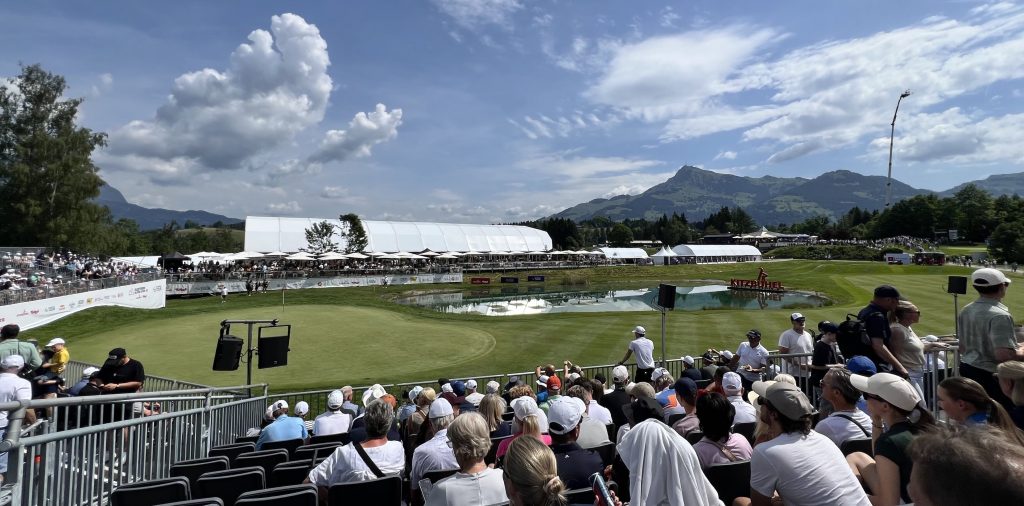
My trip took in rounds at three different clubs, each of whose courses served to showcase the style and variety of golfing experiences that can be found in this part of the world, while we also had time to watch the final round of the Austrian Alpine Open presented by SalzburgerLand, a recently revived DP World Tour event which is also helping to establish the country as a serious player in the golf event space, as well as highlighting Austria’s growing stature as a summer destination, rather than being just a wonderland for winter sports.
The tournament, which returned in 2025, is set to run until 2028 under its current sponsorship, with the hosting duties rotating between Kitzbühel-Schwarzsee-Reith (2026 and 2028) and Gut Altentann (2025 and 2027).
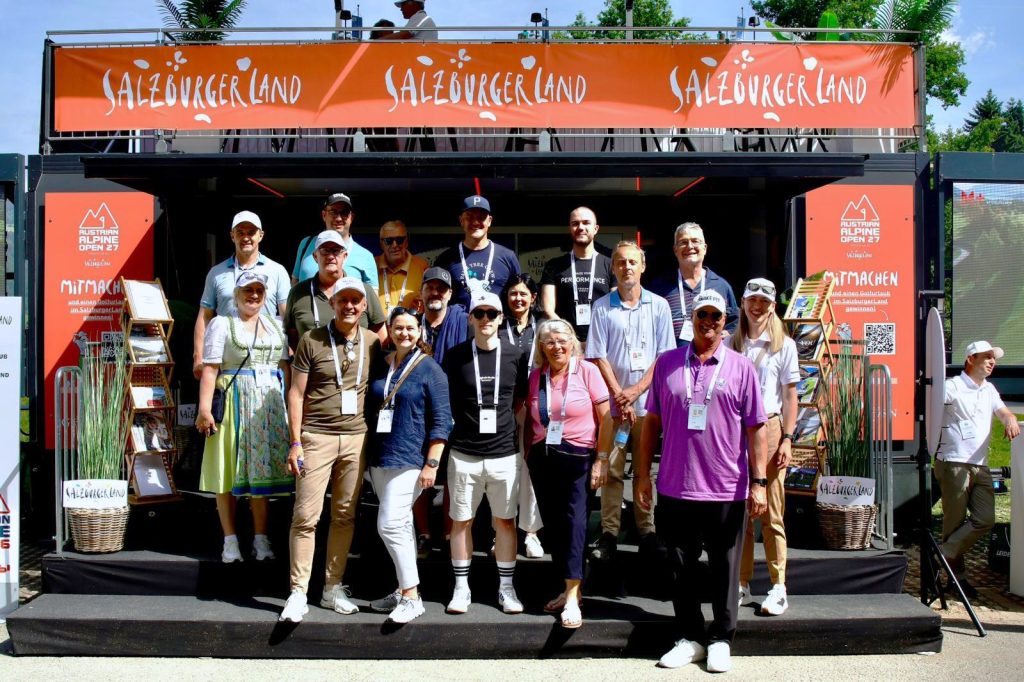
GUT ALTENTANN: AUSTRIA’S NICKLAUS MASTERPIECE
First up, and fresh off a 90-minute flight from London Gatwick, we teed it up at Golfclub Gut Altentann, a private member’s club located 20-minute drive from the centre of Salzburg. The course, which opened in 1988, occupies a special place in European golf in that it was here that the great – and still very much alive – Jack Nicklaus, with some help from Ron Kirby – built his first design in mainland Europe.
The 18-hole layout perfectly showcases Nicklaus’s design philosophy. Water hazards come into play on numerous holes, expansive bunkering demands strategic thinking, and large undulating greens reward precise approach shots. While the 6,684-yard, par-72 course presents a genuine challenge, which was put to the professional test when it hosted the first three editions of Austrian Open from 1990-92 – and again at last year’s Austrian Alpine Open – it is a fair and enjoyable one for golfers of all abilities providing you play off the tees appropriate to your skill level.
The opening holes unfold across largely flat terrain, before introducing more elevation changes and strategic complexity as you move towards the turn. Throughout the round, players encounter the risk-and-reward decisions that have become synonymous with Nicklaus designs worldwide, while water plays a large part in proceedings too, coming into play at no fewer than 11 holes.
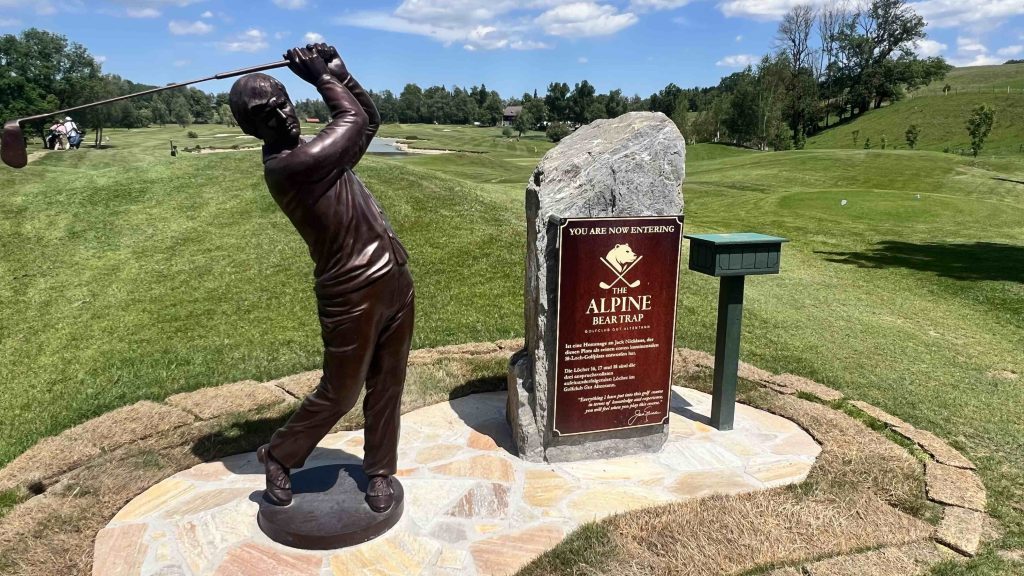
The course fully shows it teeth for the final three holes, which have been named ‘The Alpine Bear Trap’, a heavy nod to the fearsome closing stretch at PGA National in Florida, a course that Nicklaus designed that now hosts the Cognizant Classic on the PGA Tour. Altentann’s knee-trembling trio comprise the 440-yard, par-4 16th, which features a lake down the entirety of the right side, the final 150 yards of which also feature a snaking bunker; the 420-yard 17th, which is located on the other side of the lake with water all down the right side of a very narrow fairway and the green perched on the water’s edge.
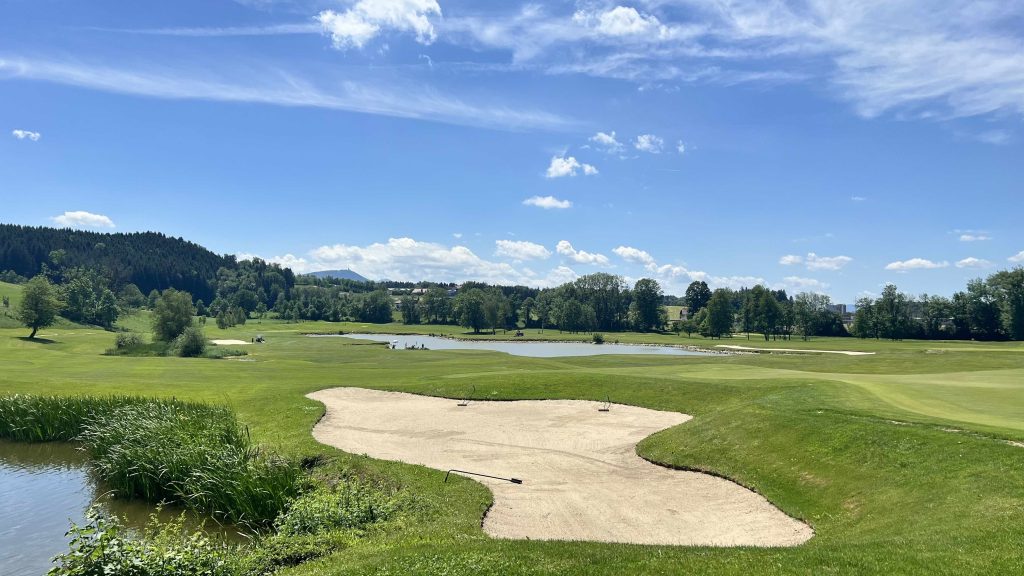
The closing hole is a 490-yard, par-5 which has a stream running left from the tee that then cuts across the fairway as it doglegs sharply left to the green to a raised green with a pond to the right. It’s scary stuff, especially off the back tees, and certainly had me worrying about my supply of ammunition with two full 18-hole rounds still to play.
The course was coming out of the ravages of winter during our trip – the course is closed from November through to mid-March due to snow – so was still a way off from peak condition, but it’s easy to see why its design makes it a perfect tournament venue. And with some more renovations taking place before its stages next year’s Austrian Alpine Open it is sure to serve up a strong test for Europe’s top professionals in 2027.
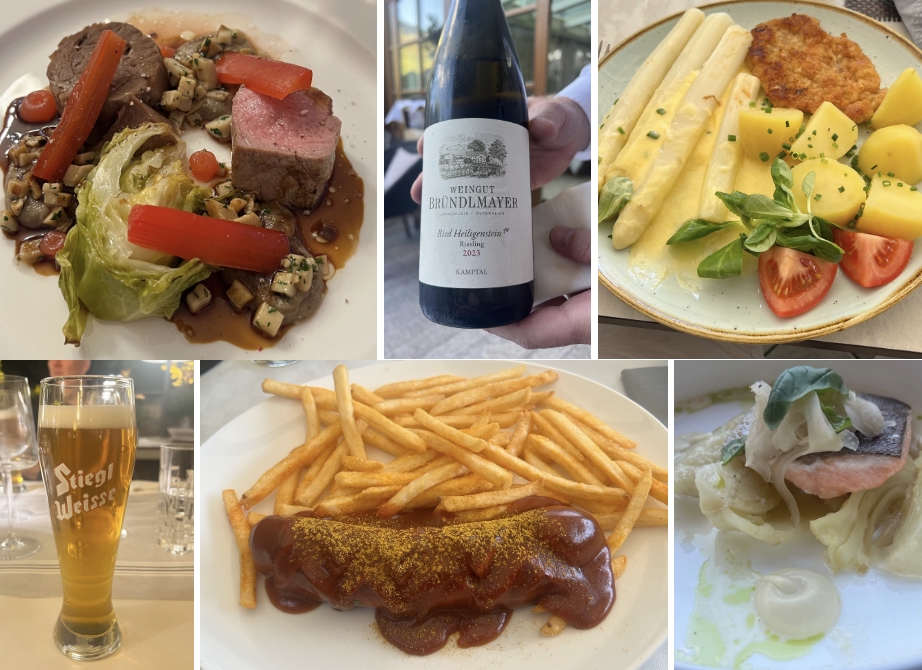
A game at Altentann is enhanced by the magnificent clubhouse, housed within a beautifully restored 200-year-old farmhouse, where golfers can enjoy traditional Austrian cuisine – yes, I had the wiener schnitzel – and a chilled beverage on a sun-drenched terrace overlooking the course.
BUNKERS DEEP, MOUNTAINS HIGH
If Gut Altentann represents Austrian championship golf at its finest, Zell am See-Kaprun Golf Club, our next stop, delivers one of the most visually spectacular golfing experiences in Europe.
Located on the broad valley floor beneath the imposing Hohe Tauern mountains, a 90-minute drive south of Salzburg, the club features two cracking 18-hole courses – the Schmittenhöhe and Kitzsteinhorn. Both layouts offer panoramic views of the surrounding mountains, including the glacier-covered Kitzsteinhorn peak, which rises more than 3,000 metres above sea level. Despite the dramatic scenery, the golf courses are relatively flat, making them easily walkable.
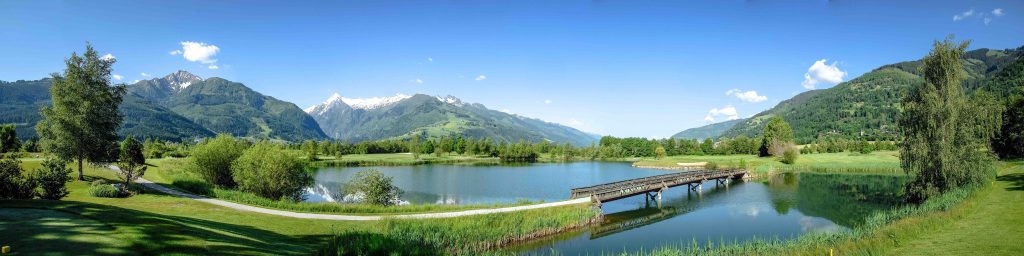
The par-73 Kitzsteinhorn, which we played, is the shorter of the two courses at 6,600 yards from the back tees, with the holes arranged as two returning nines. Water comes into the reckoning on at least half the holes, most notably on the back nine. Unusually, there are back-to-back par fives twice during the round, at 3 and 4, and again at 17 and 18.
Highlight holes for me included the right doglegging 4th (rated stroke index 1), where a small pond protects the front right of the green; the par-three 7th, with a large bunker in front of the green; the par-five 10th, which plays to a peninsula green; and the short par four 15th, veering left from the tee around another water hazard en route to the green.
Reed-lined water hazards and tree-lined fairways are a constant challenge, as is the distraction of the beautiful Alpine scenery, but it’s possible to put a decent score together if you play the percentages and don’t get tempted to go hunting for pins perched close to the water – which I failed to do.
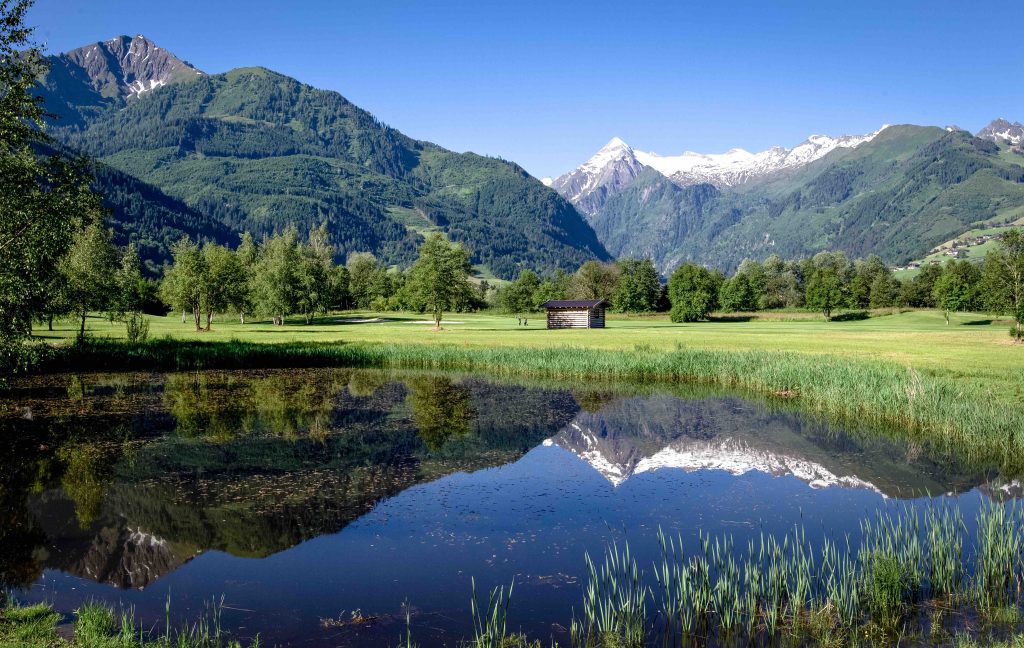
Bernhard Langer clearly had no such issues when notching up a course record 66 on the Schmittenhöhe in 1992 – a figure long-since lowered – while former women’s world no.1 Annika Sörenstam also mastered the twists and turns better than most en route to claiming the first of her 90-plus professional wins at the OVB Damen Open which was held here in the same year.
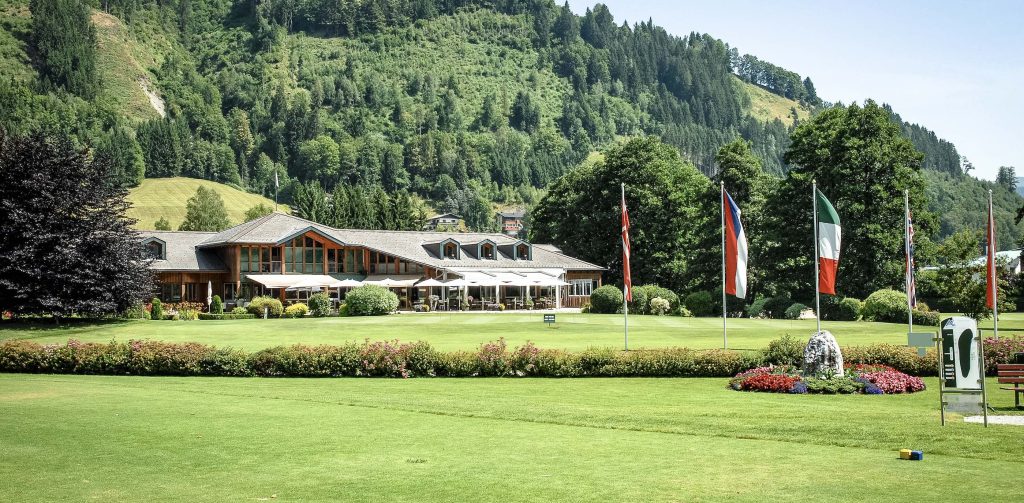
Sadly, my own record-breaking effort was perhaps for the number of lost balls in a round, with more than half-a-dozen going missing in action due to a misbehaving driver and some misjudged approach shots. Still, all was almost forgotten over a magnificent lunch on the clubhouse patio which looks out over the courses and those unforgettable mountain views.
GLACIAL PLAY
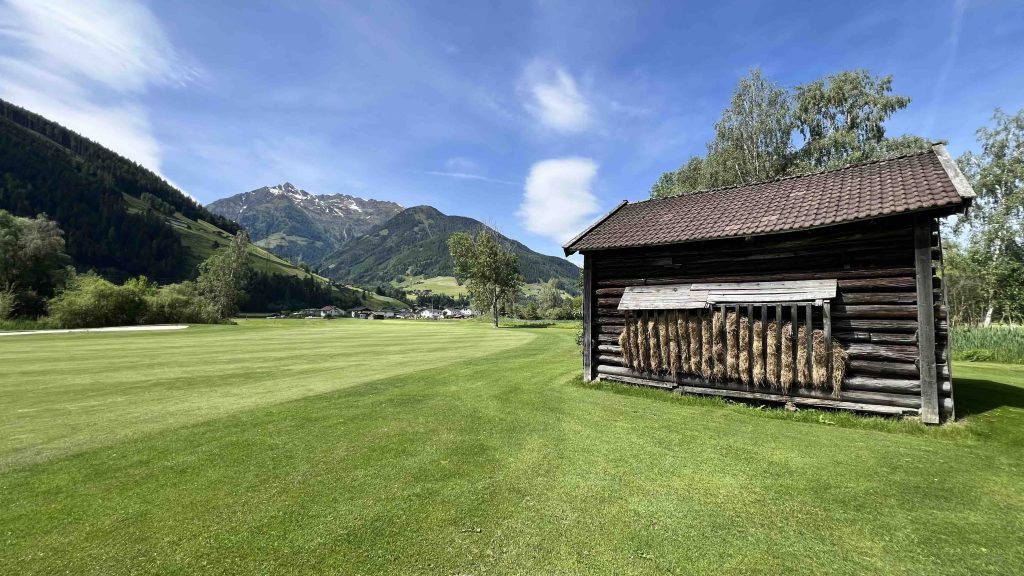
Our final course, Hohe Tauern National Park Golf Club in Mittersill, required a short drive west of Zell am See. Set amid open countryside, and with spectacular views in every direction, the charming 18-hole, par-70 course winds through former farmland, incorporating ponds, streams and traditional hay barns into its design.
The latter had an annoying habit of entering my line of sight, and it’s quite something to find yourself in the fairway yet still having to fly over a building to reach the green. Thankfully, none of them had windows, so the sound of shattering glass was avoided.
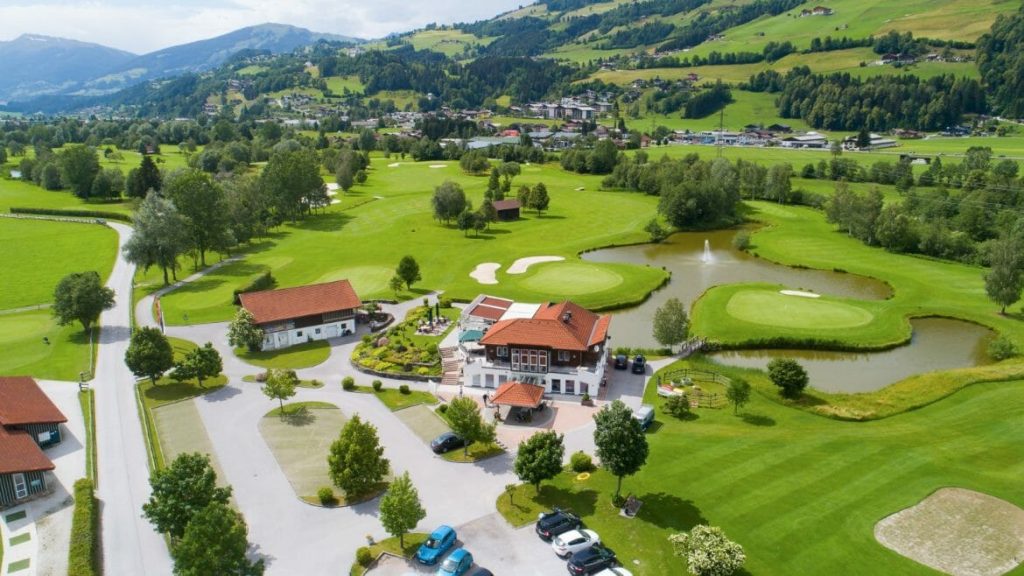
In a round full of visual highlights, perhaps the course’s most memorable feature is the 150-yard, par-three 18th whose island green provides a dramatic finale in front of the clubhouse terrace. It’s the kind of hole that creates lasting memories, whether the ball finds the putting surface, as it mercifully did in my case (ignoring the 95 shots that preceded it) or submerges itself in the surrounding water – a fate which befell my distraught playing partner, whose career record low round was sadly lost with a topped tee shot followed by a over-hit reload from the drop zone that found the murky waters behind the green.
Thankfully a refreshing beverage and another award-winning schnitzel – this time made with chicken rather than traditional veal – temporarily distracted us from our thoughts of what might been, although discussions of the costly tee shot re-entered the conversation once we boarded the minibus back to our hotel.
The relaxed atmosphere and stunning setting make Hohe Tauern an ideal complement to the higher profile championship venues nearby, and may provide a welcome boost to your confidence.
KITZBÜHEL GOLF FESTIVAL
For those travelling in a group in search of some après-golf fun, then nowhere in Austria likes to party harder than Kitzbuhel. The beautiful mountain resort may be more famous for its downhill ski runs and buzzing nightlife, but during the summer months it is a spectacular alpine leisure destination, attracting hikers and bikers in their thousands and a growing number of golfers.
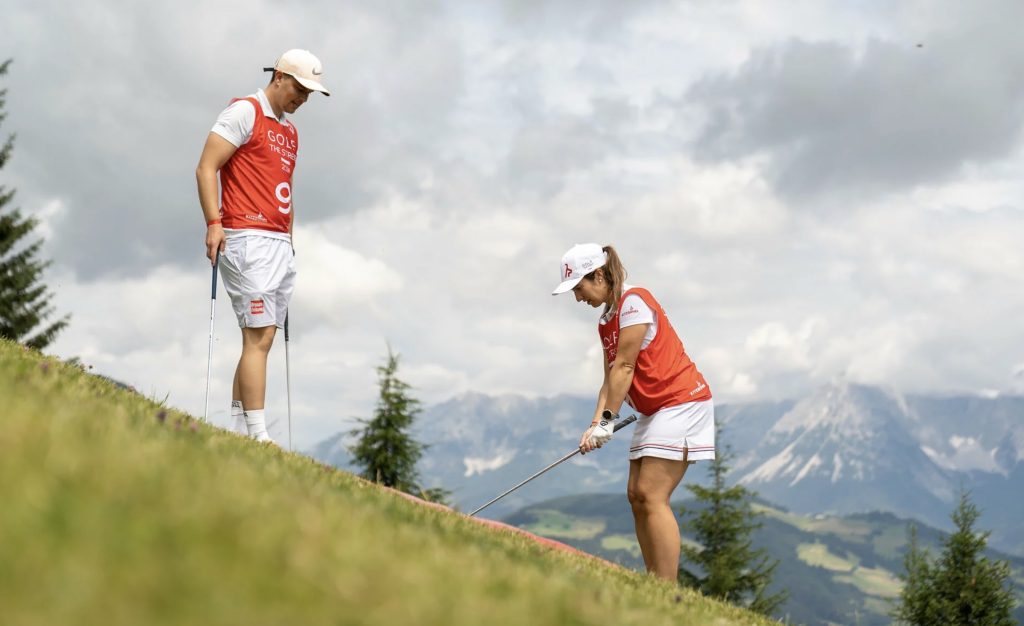
The town plays host to annual Kitzbühel Golf Festival, a week-long celebration that involves no fewer than 12 tournaments held at its four main courses – Eichenheim, Schwarzsee, Kitzbühel and Rasmushof. It also includes ‘Golf the Streif’ an adrenaline-fuelled, 12-hole tournament that challenges golfers to conquer the world’s most difficult downhill ski course with golf clubs instead of skis. With slopes of 80%, and an elevation change of 800 metres, it’s not for the feint-hearted. This year’s festival takes place from June 21-28, with award-winning chefs and local wineries all adding to the festival flavour, although given the imminent date it might be one to put into the diary for next year.
BEYOND THE FAIRWAYS
Although the courses provide the primary attraction for any golf trip, plenty of Salzburgerland’s appeal as a golf holiday destination lies in what happens away from the fairways. Rather than flop around a pool, the region demands visitors to immerse themselves in the Alpine landscape and get out into nature.
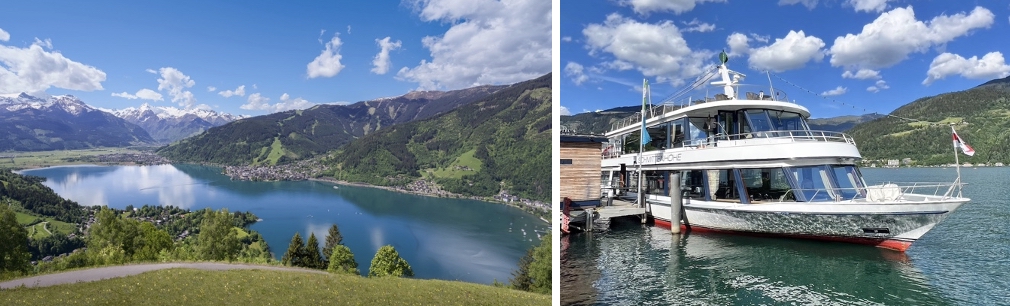
One of the most enjoyable – and relaxing ways to do this is by spending time on Lake Zell, the sparkling body of water that sits at the heart of Zell am See. Boat trips across the lake offer a completely different perspective on the surrounding mountains. Sightseeing boats and passenger ferries glide across the crystal-clear waters, passing lakeside villages and revealing magnificent views of the Schmittenhöhe mountain and distant glacier peaks. On a warm summer evening, a cruise across the lake with a glass of wine in hand provided a wonderfully relaxing contrast to a tense day spent managing my golf ball around the golf course.
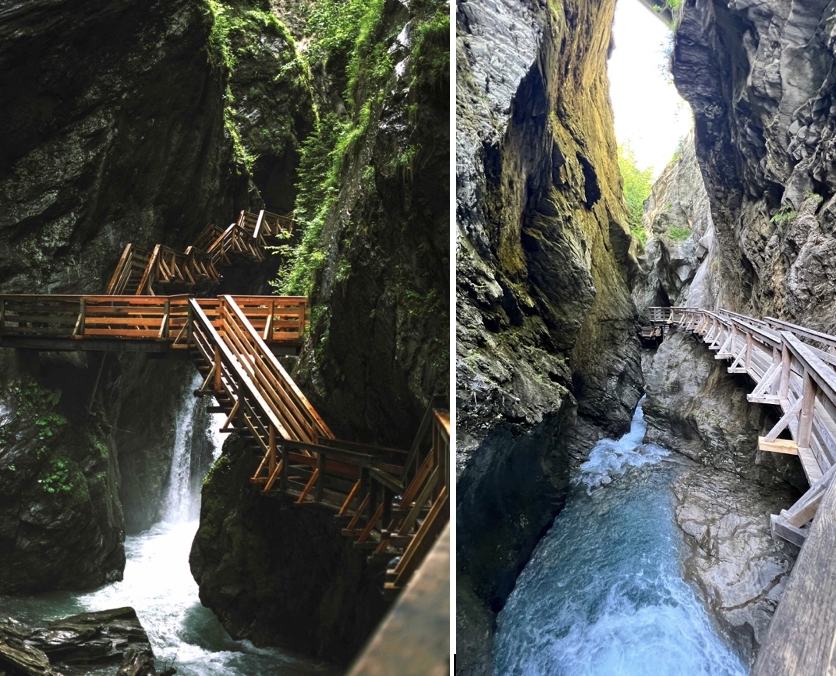
For those seeking a slightly less sedate activity, the Sigmund Thun Gorge near Kaprun is a must-visit attraction. Carved by the powerful glacier-fed Kapruner Ache river over thousands of years, the narrow gorge features a series of wooden walkways suspended above swirling waters, waterfalls and sculpted rock formations. The 320-metre route allows visitors to experience the raw power of nature at close quarters while learning about the geological history of the region, both of which I found fascinating.
The nearby Kaprun Museum, housed in a 400-year-old farmhouse, offers insights into local history and provides additional context for understanding the area’s development from remote mountain settlement to world-class tourism destination, while the Hohe Tauern National Park Centre in Mittersill, which we visited, is one of the largest alpine nature museums in Europe, featuring 10 immersive, interactive worlds that explore the region’s glaciers, wildlife, minerals, and alpine history. While it felt a little bit like a school trip at times, I came away with a new-found interest in tectonic plates, and an insight into the breeding habits of the marmot and the majestic hunting skills of the Stone Eagle.
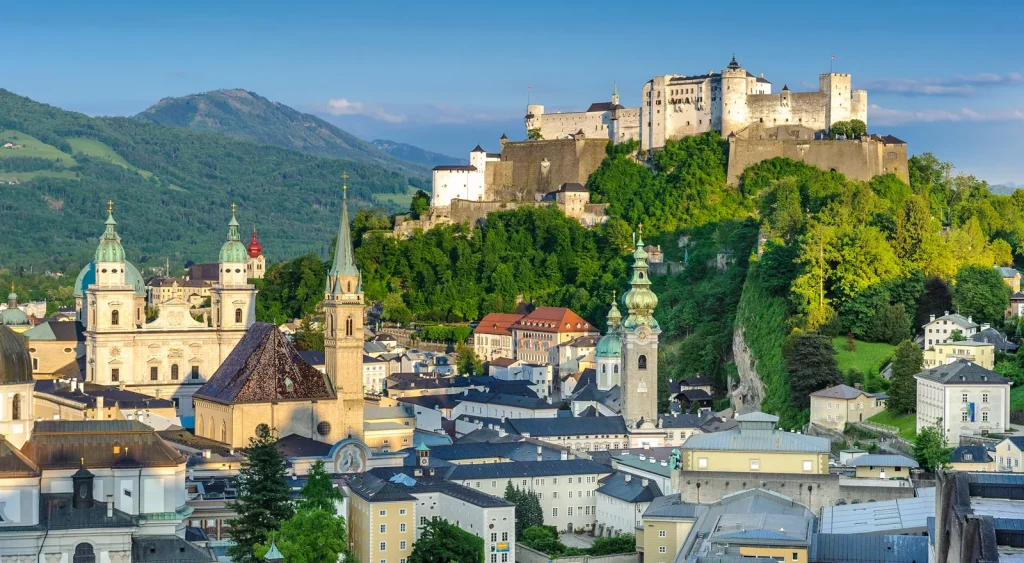
Salzburg: Culture & History
No visit to the region would be complete without spending time in Salzburg itself. The city effortlessly combines history, culture and architectural beauty. Visitors can wander through the UNESCO-listed Old Town, explore Mozart’s birthplace, visit the imposing Hohensalzburg Fortress or simply enjoy coffee and cake in one of the city’s elegant cafés. The city’s compact layout makes it easy to explore in a day, yet there is enough to to see and do to occupy visitors for much longer.
WHERE TO STAY
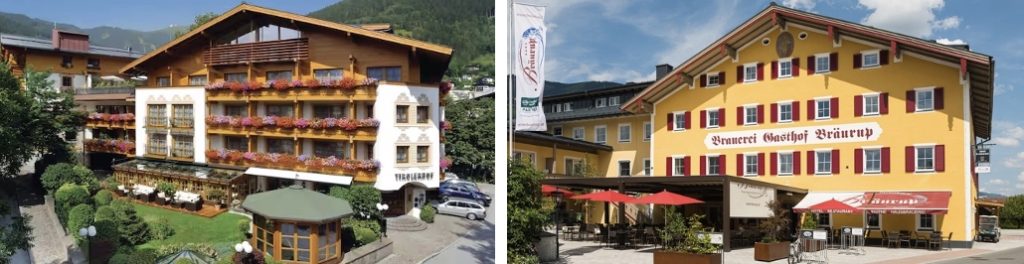
During our visit, we stayed at two different hotels, both of which stood out for their combination of comfort, location and authentic Austrian character.
The Hotel Tirolerhof in Zell am See enjoys an enviable position less than five minutes’ walk from both the lakefront and the town centre, with its busy choice of bars, restaurants and a casino. Family-owned and full of traditional Alpine charm, the hotel combines classic a ski hotel vibe with timber interiors. Modern amenities include a swimming pool, sauna and wellness facilities.
For the final night, we stayed in the four-star Hotel Bräurup in Mittersill, which also boasts classic Alpine architecture – sloped roof, wooden shutters and cosy interiors. Its location makes it an ideal base for golfers playing the Hohe Tauern National Park Golf Club, while also offering easy access to the surrounding mountains and hiking trails.
BOOK YOUR ALPINE GOLF ADVENTURE
To find out more about golf breaks in Salzburgerland and to buy a Golf Alpin Card, visit www.salzburgerland.com/en/